Approximately 1 in 4 persons worldwide suffer from fatty liver disease; however, the majority are unaware of it. It simply builds up until a doctor notices it on an ultrasound or during routine blood work; it doesn’t proclaim itself with pain or other evident symptoms. If you have been diagnosed with grade 2 fatty liver, your liver cells contain a moderate quantity of fat.
Currently, your liver is still functioning, but it is under strain because of extra fat. If no action is taken in this regard, gradually, inflammation and damage to the liver may begin. The good news is that this situation has been identified early enough so that you can take action. By making small, appreciable changes in your eating, physical activity, and other health-related activities, your liver will recover.
What Is Grade 2 Fatty Liver?
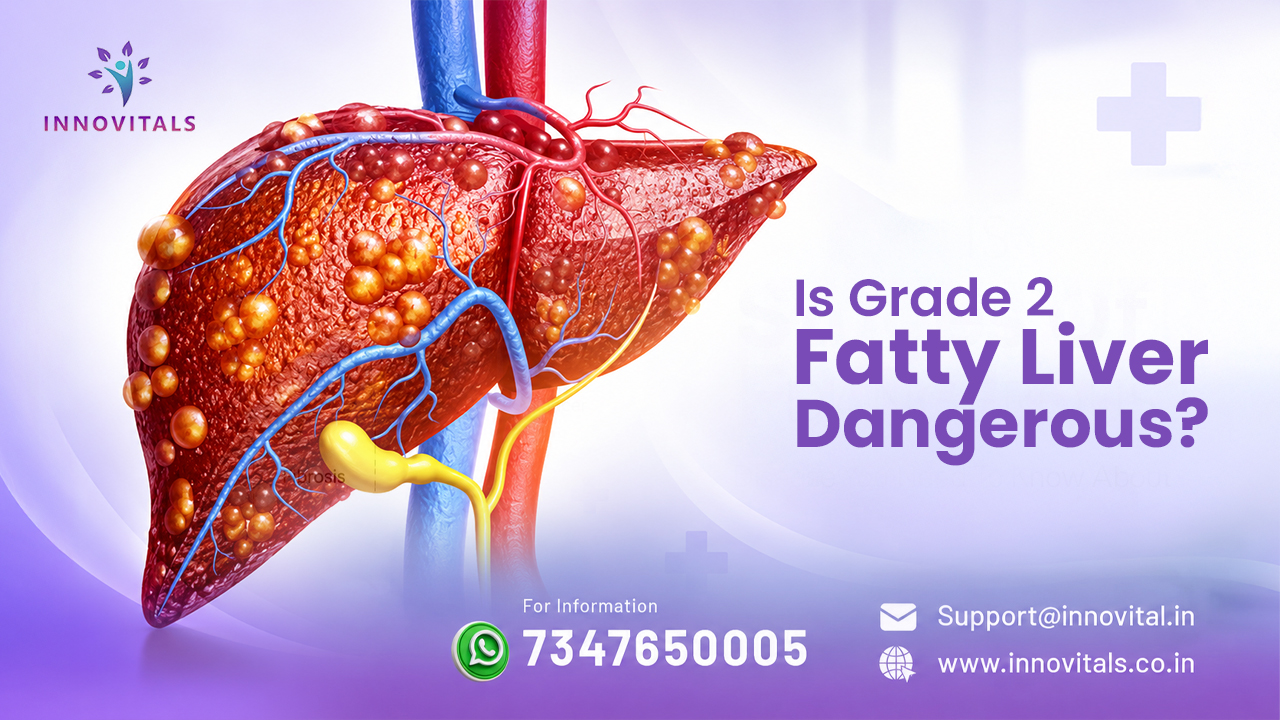
A substantial quantity of fat has built up inside the liver cells in cases of grade 2 fatty liver. Even while fat accumulation is now readily visible on imaging tests like ultrasonography, many people’s livers are still able to operate normally. However, if treatment is not received, it may cause inflammation and stress on the liver cells, which may eventually lead to more severe stages of liver disease. According to research, those with mild fatty liver are more likely to develop more serious liver diseases if they don’t make lifestyle adjustments right away. To maintain liver health and stop additional issues, early detection and treatment are crucial.
Is Grade 2 Fatty Liver Dangerous?
Indeed. It’s important to treat moderate fatty liver. Approximately 25–30% of persons globally suffer from fatty liver disease, and 20% of those who are diagnosed have moderate or grade 2 fat accumulation. Since fatty liver rarely produces symptoms, it is simple to overlook.
Here’s the issue, though. Life-threatening conditions can arise from moderate fatty liver. If left untreated, it may eventually result in cirrhosis, scarring, and inflammation. The good news is that you can actually reverse the illness at this point by making lifestyle adjustments, including eating better, exercising frequently, and losing a small amount of weight.
Consider grade 2 to be a red flag. Your liver is alerting you to the need for assistance, and there is still time to address it. Just a few easy adjustments can make a big difference. Cut back on junk food and sugary drinks. Increase your intake of fruits and vegetables and go for a daily 30-minute walk. A mere 5–10% reduction in body weight can have a significant impact.
Taking action right now is crucial. To let your doctor know whether things are getting better, schedule routine checks. Don’t ignore it, but also try not to freak out. The most important thing is that you are identifying this early enough to take action.
Symptoms of Grade 2 Fatty Liver
Because most patients with grade 2 fatty liver have no symptoms, the condition is referred to by medical professionals as a “silent disease.” But when symptoms do manifest, keep an eye out for these:
Typical signs and symptoms include:
- Persistent fatigue or weakness
- Your liver is located on the upper right side of your abdomen, which may cause discomfort or a dull ache.
- Having a full or weighty stomach
- Mild weight gain or difficulty dropping pounds
More severe warning indicators:
- Jaundice, or yellowing of the skin and eyes
- Swelling in your legs and abdomen
- Confusion or trouble focusing
What Causes Grade 2 Fatty Liver?
According to research, one in four people has fatty liver, which is caused by improper fat processing by the liver. Among the primary factors are:
Being Overweight or Obese: Your liver is under a lot of stress when you are overweight. Your liver has to work harder when your body has excess fat.
Insulin resistance, also known as type 2 diabetes: If you have type 2 diabetes, your body is unable to use insulin as it should, which eventually causes fat to accumulate.
Bad diet: Consuming excessive amounts of processed foods, sweets, and unhealthy fats might cause your liver to become overly fatty.
Lack of activity: A sedentary lifestyle exacerbates the issue and leads to the accumulation of fat on the liver if you don’t exercise or move about much during the day.
High cholesterol or triglycerides: High triglycerides or cholesterol indicate that your blood already contains too much fat, which is then stored in your liver.
Excessive alcohol consumption: Excessive alcohol consumption overwhelms your liver’s capacity to handle alcohol.
Certain medications: Fat accumulation may result from certain medications, such as steroids or cancer therapies.
Family history: Some people may be more susceptible to fatty liver due to genetics.
Diet and Lifestyle Changes That Help
One of the best strategies to cure grade 2 fatty liver is to make dietary and lifestyle modifications. What works is as follows:
Foods to consume more of:
- Fresh produce
- Brown rice, oats, and whole wheat bread are examples of whole grains.
- Fish, poultry, beans, and lentils are examples of lean protein.
- Nuts, avocados, and olive oil are good sources of fat.
- Omega-3 fatty acids are found in fatty fish like salmon.
Foods to restrict or stay away from:
- Sodas and sugary beverages
- Pasta, white rice, and white bread
- Processed and fried foods
- Processed meats and red meat
- Foods with added sugar flavours
- Too much salt
Exercises that help:
Your liver’s fat content can really be decreased with regular aerobic activity. You don’t have to work out hard. Simple exercises are effective.
- Every day, go for a 30-minute brisk stroll.
- Cycling or swimming
- Twice a week, strength training
According to studies, liver fat and inflammation can be considerably reduced by decreasing merely 5–10% of your body weight.
Some significant adjustments you ought to make are:
- Sleep for seven to eight hours every night.
- Use deep breathing, yoga, or meditation to reduce stress.
- Reduce or give up alcohol entirely
- If you have high cholesterol and diabetes, manage them.
How Can Nutritional Support Help?
Although nutrition and exercise are the cornerstones of liver health, there are certain vitamins and supplements that, when selected and taken appropriately, may improve liver health. The potential of some components to assist the liver and lessen fat buildup has been investigated. Among these is N-Acetyl Cysteine (NAC), which aids in the production of glutathione, the body’s most potent antioxidant. After three months, NAC supplementation dramatically reduced liver enzyme levels in patients with fatty liver disease, according to research.
Next, silymarin, a substance that shields liver cells, is found in milk thistle. Silymarin decreased liver fat, according to a comprehensive analysis of 26 studies with 2375 individuals.
Some research indicates that betaine, which is abundant in beetroot extract, aids in the reduction of liver fat. A study on PubMed Central supports this finding as well.
By boosting bile production, which aids the liver in eliminating waste and improving fat digestion, dandelion extract also promotes liver detoxification.
Look for a liver detox product that incorporates these components. All of these professionally validated components are included in Innovital’s liver vitals supplement to promote the health of your liver.
Omega-3 Fatty Acids: In individuals with fatty liver disease, omega-3 supplementation dramatically decreased liver fat, according to a study published in PubMed Central. A daily intake of 1000–3000 mg of EPA and DHA is advised. Omega-3 helps your liver burn down fat more efficiently and lowers inflammation.
Supplements help maintain the health of your liver, but they should never take the place of medications or good behaviours. They are most effective when combined with diet, exercise, and medications.
Can Grade 2 Fatty Liver Be Reversed?
In most circumstances, it is possible to reverse grade 2 fatty liver. With the correct diet and lifestyle adjustments, it can be reversed. When you provide your liver with the proper care, it has an amazing capacity to heal itself.
How long does it take?
Depending on the individual and the severity of the ailment, the timeline may change. With the right care, it can take three to four months to reverse.
What does “reversal” mean here?
Liver fat significantly drops
Liver enzyme levels return to normal.
Reduced inflammation
Improvements in liver function
Success is dependent upon:
How much weight you shed (even 5–10% is effective)
How regularly you adhere to your diet
Frequent exercise
Taking care of other ailments like diabetes
Steer clear of booze
Getting adequate rest
Read more details: Grade 1 Fatty Liver – Causes, Symptoms, and Best Treatment Tips
Finally,
A warning sign to take control of your health is grade 2 fatty liver. If you give your liver the proper support, it is the only organ that can heal itself. Extreme dieting or overnight alterations are not necessary. Consistency and dedication to little, long-lasting habits that accumulate over time are what you need.
Today, start with one thing. Perhaps it’s giving up sugar-filled beverages. After supper, it might be a 20-minute stroll. Just get started, whatever it is. Even a 5–10% weight loss can reverse liver fat, and significant benefits usually take three to four months to manifest.
Every day, your liver puts forth a lot of effort on your behalf. It’s time to repay the favour now. You have all you need to make things better.
Read Also: Fatty Liver Disease: Causes, Symptoms, Diagnosis & Treatment
Frequently Asked Questions (FAQs)
Can a grade 2 fatty liver be cured?
Although grade 2 fatty liver is a major concern, it can be controlled or even reversed with the right drugs, supplements, and dietary and lifestyle modifications.
Can fatty liver cause ankle swelling?
Yes. Fatty liver can accumulate fluid in the body in advanced stages, which could cause swelling in any area of the body.
What is the life expectancy of a person with stage 2 fatty liver disease?
The effectiveness of the condition’s management determines life expectancy. Many people maintain their regular lives while making the necessary lifestyle adjustments.
Read more details: How to Manage Fatty Liver Grade 2: Symptoms, Medications, and Lifestyle Tips
Can your liver recover from stage 2?
If assistance is given, the liver is the only organ that can heal itself. It may not be able to fully recover, but scarring and inflammation can be healed.
What medication is used for Grade 2 fatty liver disease?
For grade 2 fatty liver, there isn’t a specific medication. Treatments often concentrate on managing obesity, diabetes, and routine general health monitoring.
How long can you live with fatty liver grade 2?
Grade 2 fatty liver does not automatically mean a shortened lifespan. With healthy lifestyle changes and proper medical monitoring, many people can manage it well and prevent progression.
Can I eat rice in fatty liver grade 2?
Yes. You can eat rice in moderation. Prefer smaller portions and combine rice with vegetables, dal, lean protein, and other high-fiber foods. Brown or minimally processed rice can be a good option.
How can I reduce my grade 2 fatty liver naturally?
Focus on gradual weight loss if overweight, regular exercise, a balanced high-fiber diet, limiting sugar and processed foods, avoiding excessive alcohol, and managing blood sugar and cholesterol.
Is paneer good for fatty liver grade 2?
Paneer can be included in moderation. Choose smaller portions and preferably lower-fat paneer, while prioritizing a balanced diet rich in vegetables, whole grains, and lean protein.
Can I eat rice in fatty liver grade 2?
Yes. Rice does not necessarily need to be completely avoided. Keep portions controlled and avoid pairing large amounts of rice with sugary, fried, or highly processed foods.
Is medicine required for fatty liver grade 2?
Not always. Treatment depends on the underlying cause, liver inflammation, fibrosis risk, weight, diabetes, cholesterol, and other health factors. A doctor can determine whether medication is appropriate.
How serious is stage 2 liver?
If by “stage 2” you mean grade 2 fatty liver, it indicates a moderate amount of fat in the liver and should be taken seriously. It is often manageable, but untreated fatty liver can progress to inflammation and fibrosis.
Read Also: How to Detox Your Liver Naturally: Tips & Healthy Habits