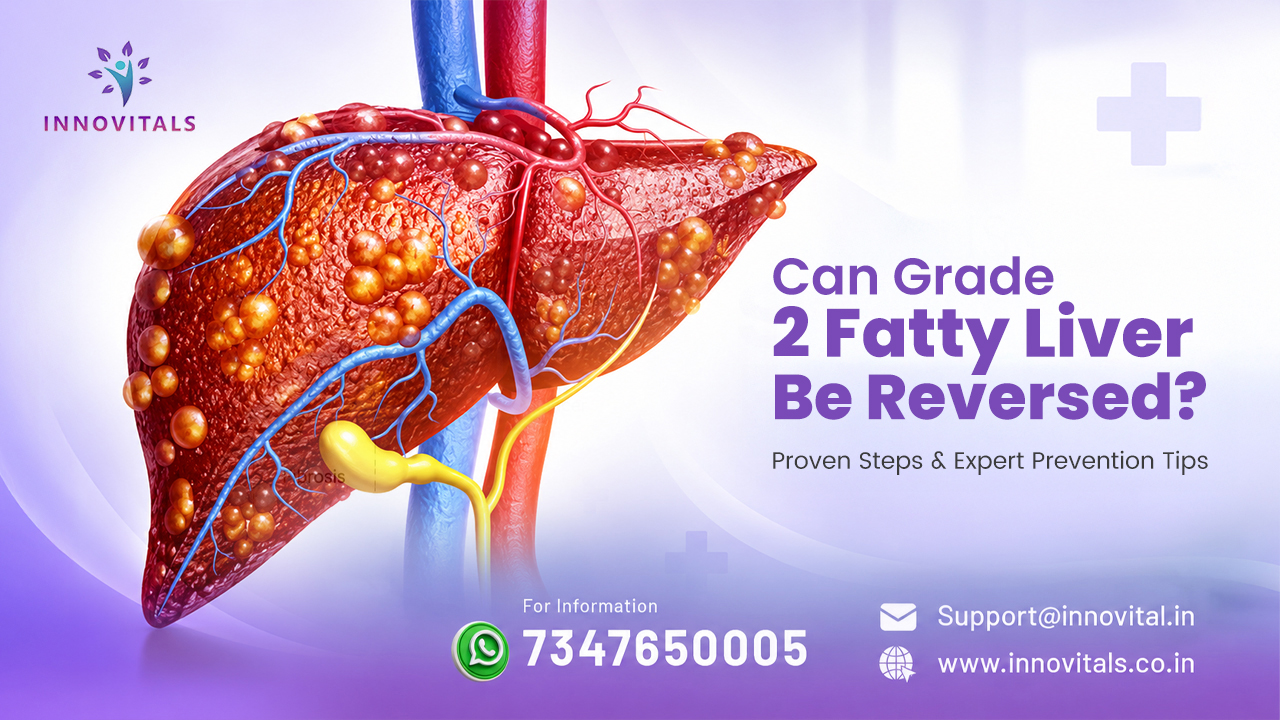
Your thoughts are probably racing if you’ve just seen an ultrasound result that states “Grade 2 Fatty Liver”. You may be wondering if this diagnosis is irreversible, if your liver is already irreparably damaged, or if you will always have to deal with it. Many folks imagine worst-case scenarios, Google late into the night, and quietly panic. Let me begin by stating this calmly and clearly: Although grade 2 fatty liver is a terrible condition, there is still hope. In actuality, it is the point at which significant reversal is still quite feasible for a lot of people.
One of the most prevalent illnesses of our day is fatty liver disease. According to studies, over 30% of persons worldwide currently suffer from non-alcoholic fatty liver disease. According to several studies, the prevalence in India ranges from 9% to over 50%, depending on the location and lifestyle, with an average of nearly one in three persons.
Therefore, you are by no means alone if you have Grade 2 fatty liver. More significantly, your diagnosis is a warning sign rather than a verdict, and warnings are useful because they allow us to take action.
What is a Grade 2 Fatty Liver?
On ultrasonography, fatty liver is often rated according to the amount of fat visible in the liver and the clarity of interior structures. Grade 1 is characterized by a slight buildup of fat and frequently no inflammation. Grade 2 denotes a moderate accumulation of fat, where the liver is obviously under metabolic stress and inflammation may begin to show. Grade 3 fat buildup has the highest chance of fibrosis and long-term harm.
In the middle is grade 2. It indicates that although your liver is having difficulties, it is still able to recover. At this point, there is frequently minimal to no long-term scarring. Imagine your liver as an oil-soaked sponge. Grade 2 indicates that the sponge has been wet more than it should be but hasn’t yet solidified or cracked. You can still lose a lot of that extra fat if you take action right now.
Is Grade 2 Fatty Liver Dangerous?
When someone receives a diagnosis of “Fatty Liver Grade 2” in their report, it can cause them to feel anxious and anxious. Although it is a dangerous condition, most people’s health is not immediately threatened by it. Grade 2 means that the liver has accumulated enough fat, had some moderate inflammation, and experienced some mild stress, but no long-term harm has yet been done.
The only method to determine how long the liver will remain under stress and move closer to the latter stages of liver injury (such as fibrosis, inflammation, or possibly cirrhosis) at this point is if the fatty liver disease (FLD) grade is neglected over time.
The good news is that there are many chances to potentially reverse Grade 2 FLD with prompt lifestyle modification; thus, now is the ideal moment to seize these chances by changing one’s lifestyle rather than becoming anxious.
Can Grade 2 Fatty Liver Be Cured Completely?
In actuality, most individuals with Grade 2 fatty liver may fully reverse the illness, returning their liver to its pre-diagnosis state in terms of both appearance and function. Over time, inflammation will subside, liver fat can progressively decrease, and blood tests will return to normal levels.
A significant improvement will typically be visible on follow-up ultrasounds or FibroScan, and in certain cases, your liver may appear completely normal again! For individuals who were initially diagnosed with fatty liver disease, this may seem like a miracle, but the liver’s capacity to recover from the various mechanisms that led to the illness is truly remarkable!
After that, I think it’s important to comprehend what “cure” means when discussing fatty liver. Fatty liver is more of a problem that is impacted by your lifestyle (i.e., what you eat) and metabolic health than it is an illness that will go away after treatment.
Therefore, the amount of fat in your liver may gradually start to return if the contributing factors that may have initially caused your fatty liver do return to pre-existing levels, such as eating poorly, being overweight, having insulin resistance, not exercising regularly, and/or experiencing long-term stress. This is one of the main reasons why most medical professionals do not discuss a long-term cure; instead, they may discuss strategies to manage the illness for many years to come!
It is better to think of reversal as a process rather than a destination. Many people see noticeable benefits in just a few months, but sustaining those gains calls for continued body maintenance. This does not entail living in dread or under continual constraints. It entails developing habits that help your liver over time, such as eating more whole meals, exercising frequently, and maintaining a healthy weight and blood sugar range.
A diagnosis of Grade 2 fatty liver can therefore be a pivotal moment. It provides an opportunity to change behaviours before major harm happens and to safeguard not only your liver but also your general health for many years to come.
What Does Science Say About Reversal?
It is important to know that there is ample scientific evidence of this; it is not simply beautiful words. There are various clinical studies that show that losing about 7–10% of body weight results in a drastic reduction in fat, inflammation, and, in many cases, helps people with early-stage fibrosis. The liver gets some relief even by reducing a small amount of body weight. It is possible to reduce fat in the liver through reducing body weight by only 3–5%. Greater healing effects are usually seen by the time body weight is reduced by 7–10%.
It is recommended by the American Association for the Study of Liver Diseases and other liver associations to lose weight and change lifestyle as a treatment method for fatty liver disease. The liver is very robust. In most cases, it responds faster than expected when you reduce the burden on it.
What Determines Whether Your Fatty Liver Can Be Fully Reversed?
Everybody’s experience with Grade 2 fatty liver is different. Six months later, two individuals may have the exact same ultrasound report but quite different results. Why? Because reversal is dependent on a few critical elements, the majority of which are under your control.
How Early You Act
Time is important. Your chances of a complete reversal are higher if you react to a Grade 2 diagnosis as soon as possible. Most people still have little to no long-term scarring (fibrosis) at this point. Reversal becomes more difficult and takes longer as fibrosis progresses. Taking action right now creates the ideal healing environment for your liver.
Weight and Fat Distribution
Visceral abdominal fat can harm the liver; waist circumference has decreased even in the absence of a significant change in LT. A smaller waist circumference may benefit the liver; measurements will demonstrate this.
Blood Sugar Regulation and Insulin Resistance
Insulin resistance and fatty liver are tightly related. The liver is continuously forced to retain more fat if you have diabetes, prediabetes, or elevated fasting insulin levels. The likelihood of reversal is significantly increased by increasing insulin sensitivity through diet, exercise, and weight loss.
Diet Quality (Not Just Calories)
The liver may respond extremely differently to two diets that have the same number of calories. Diets heavy in fructose, sugar-filled beverages, refined carbohydrates, and highly processed meals actively encourage the buildup of liver fat. However, diets high in complete foods—vegetables, lean protein, healthy fats, and fiber—help the liver burn fat instead of storing it. For this reason, it’s crucial to pay attention to both what and how much you eat.
Consistency Over Perfection
Although they take time to recover, livers react well to consistency. The best long-term outcomes are typically seen by those who make modest, long-term modifications as opposed to drastic, short-term diets. Instead of shock treatment, your liver wants consistent support.
What Happens If You Ignore Grade 2 Fatty Liver?
Although uncomfortable, this is a crucial inquiry. Ignoring Grade 2 fatty liver can cause inflammation and fat buildup to develop silently. Over time, this could result in:
- Fibrosis (development of scar tissue)
- Steatohepatitis without alcohol (NASH/MASH)
- Cirrhosis in a tiny but noteworthy proportion of individuals
- Elevated risk of type 2 diabetes and heart disease
The fact that fatty liver is frequently silent is what makes it particularly deadly. Many people don’t feel “mostly fine” until the damage has progressed. Grade 2 is the stage where the alarm is going off, but the home isn’t yet on fire, which is why it’s such an important turning point.
Supplements to Support Reversal of Grade 2 Fatty Liver
During Grade 2 fatty liver, some vitamins can assist liver repair in addition to dietary and lifestyle modifications. A common option is a liver detox supplement that combines milk thistle and dandelion root with N-acetylcysteine (NAC). In order to boost the body’s capacity to detoxify itself and lessen oxidative stress—the harm brought on by free radical activity—NAC is an agent that aids in the production of glutathione, the most potent form of antioxidant protection for the liver.
Silymarin, another name for milk thistle, has a long history of usage as a liver-protective drug that promotes hepatic cell regeneration. Dandelion root has long been used to promote healthy liver function and aid in the production of bile.
Finally,
A diagnosis of Grade 2 Fatty Liver Disease is an early warning sign and a chance to make some changes, not a death sentence. Although your liver is now under stress, it can still recover if you take prompt, efficient action to regularly alter your lifestyle choices under the right advice from a competent professional.
It won’t work to find quick treatments to get your body healthy. However, you can have a very significant impact on your health if you gradually improve your body weight, metabolic health, nutrition, and exercise habits. Being flawless in every aspect is not as crucial as being consistent. You can give your liver the best chance of healing by taking action now, which will also offer you the best chance of maintaining your general health for many years to come!
Read Also: Fatty Liver Disease: Causes, Symptoms, Diagnosis & Treatment
Frequently Asked Questions (FAQs)
Can grade 2 fatty liver become normal?
Indeed, at the Grade 1–Grade 2 (mild-moderate) fatty liver stage, the liver can frequently recover or return to normal. The liver can renew itself quite well. Many patients find considerable improvements in their fatty liver, and in some cases, a total reversal of the condition, when they make a persistent long-term effort to reduce around 5–10% of their body weight, eat a balanced diet, and continue to be physically active.
How many days does it take to reverse a Grade 2 fatty liver?
Before you can reverse a fatty liver caused by obesity (Grade 2), you must adopt a healthy lifestyle for approximately three to six months. Changing your food habits, increasing your physical activity, and starting to lose weight are all examples of implementing a healthy lifestyle. Although you can detect changes in your liver earlier, real changes don’t occur until you have lost 5% to 10% of your body weight, at which point your fatty liver will drastically reduce.
What is the best exercise for fatty liver grade 2?
The optimum kind of exercise for grade 2 fatty liver is 150 to 200 minutes per week of moderate-intensity aerobic activity (such as brisk walking, cycling, or swimming) combined with two to three times a week of strength training to improve your body’s ability to use insulin and increase fat burning. Consider using Pilates or yoga to assist lower stress levels. Before starting any kind of workout regimen, always get medical approval, and make an effort to select activities that you will be able to stick with over time.
Is grade 2 fatty liver serious?
A medium amount of fat in the liver is known as grade 2 fatty liver. It frequently has to do with inflammation and the early formation of scar tissue. Although a fatty liver is typically not fatal, it is undoubtedly an indication that something is wrong with your body. You may frequently reverse fatty liver if you make lifestyle changes like altering your diet, exercising frequently, and losing five to ten percent of your body weight. Severe liver damage may result if you do nothing about this problem, such as going long periods of time without addressing it.
What not to eat in fatty liver grade 2?
Alcohol and foods high in unhealthy fats should be avoided since they increase blood sugar and encourage weight gain, which puts additional strain on the liver.
Read Also: How to Detox Your Liver Naturally: Tips & Healthy Habits